Ukrainian Armed Forces
Grey BeesThe Ukrainian Armed Forces are the military presence dug in beyond Little Starhorodivka, occupying one side of a landscape divided by the war. Their trenches, observation of the village, and uneasy proximity to opposing forces shape the routines and risks of the village’s remaining residents, even when the guns fall silent.
Positions around Little Starhorodivka
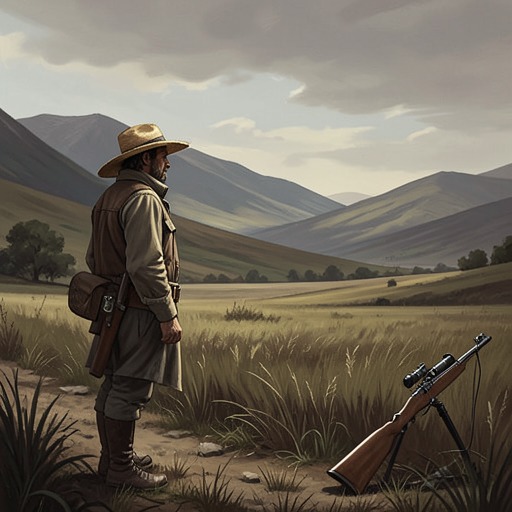
The Ukrainian Armed Forces have been stationed for three years in dugouts and trenches on a rise beyond the fields near Sergey Sergeyich’s garden. From the village, their position is not directly visible: the hump conceals Zhdanivka, while the soldiers’ presence is registered through sound and through the knowledge that they are there. The surrounding fields have lost their workers, and the landscape that once served agricultural life now separates military positions.
Across the village, beyond Pashka Khmelenko’s street, the remains of a Soviet-era apricot grove, and another abandoned field, local fighters and Russian military personnel occupy dugouts of their own. The account places the two forces in a spatial counterpoint, with Little Starhorodivka and its gardens caught between them. Sergey Sergeyich lives on Lenin Street, facing toward Sloviansk; Pashka’s garden faces toward Horlivka and lies one street closer to Donetsk.
Observation and danger
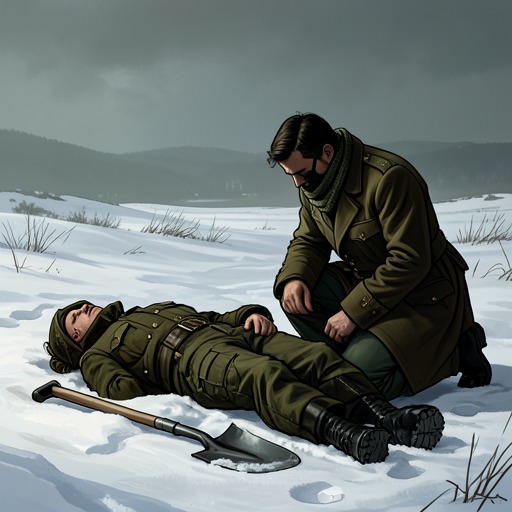
A young Ukrainian soldier explains that he has been assigned to observe the village through binoculars. He comes at night because daytime is dangerous, though entering after dark is also not officially permitted. The danger he describes is not from Sergey Sergeyich: snipers have been firing at the soldiers, and three days earlier they had taken shots at them from the church. The soldier reports four killed and three wounded that year, giving the distant front a specific human toll.
The soldiers’ observation role makes the village visible to the military even as Sergey Sergeyich insists that he would notice anyone crossing it. His confidence rests on intimate familiarity with local tracks and roads; the soldier’s account, by contrast, comes from the vulnerabilities of a position under sniper fire. Their exchange shows how civilians and soldiers inhabit the same terrain with different knowledge and different exposure to danger.
A divided zone and fragile passage
The forces’ presence belongs to a wider condition in which control is split and everyday rules are unsettled. In nearby Svitle, there are no Ukrainian soldiers and no separatists, though some residents have joined opposing sides; the local police officer and school headmaster have enlisted in the Ukrainian army. The quiet there is attributed less to any authority than to residents’ attention to their livelihoods and their lack of interest in politics.
Later, Sergey Sergeyich’s passage through the region depends on instructions and documents rather than on a single settled jurisdiction. A soldier at a checkpoint checks whether Little Starhorodivka is in the Donetsk People’s Republic and questions why Sergey Sergeyich is entering through territory described by the authorities as the occupied districts. Sergey Sergeyich answers that Petro advised him the route was safer. The exchange conveys how front-line movement is shaped by competing designations and practical advice, with permission negotiated checkpoint by checkpoint.
The war’s intermittent rhythm
The village can fall quiet for stretches without ceasing to be a military landscape. After two weeks without a shot, the residents hear of a one-day postal ceasefire intended to let mail reach villages in the grey zone. The pause is arranged around a civilian infrastructure failure—the local post offices have stopped working—but its promise depends on the fighting being suspended long enough for delivery.
The contrast between this temporary silence and the soldiers’ dugouts, casualties, and sniper threat defines the Ukrainian Armed Forces’ narrative presence. They are not described through a campaign or a battle sequence, but through their position in the fields, their exposure to fire, and the way their presence helps determine what can be seen, heard, and safely crossed. The war remains legible in the landscape even when no shot is fired.